
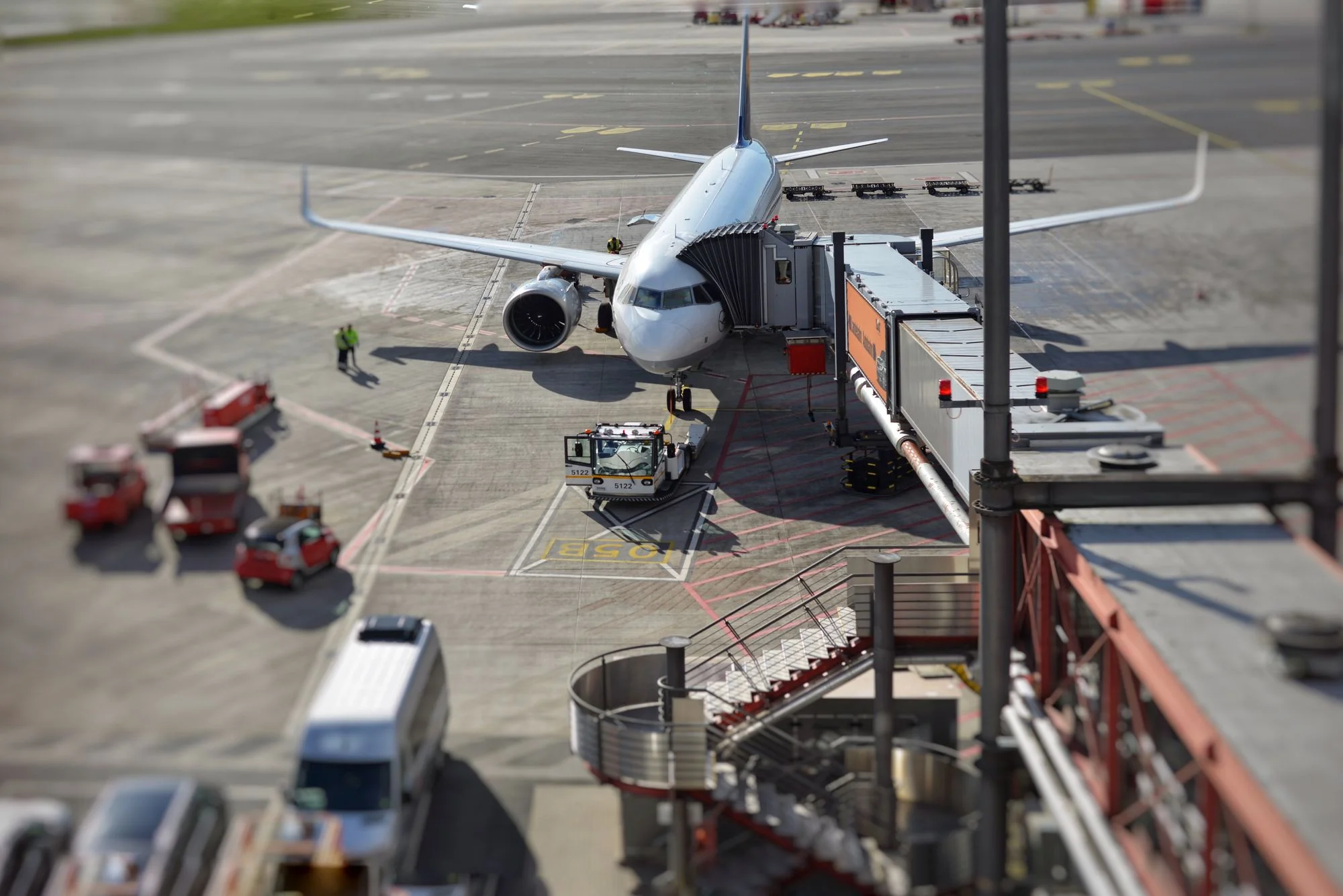
As of 2:42 p.m. Mountain Time, Nov. 13, 2026: The FAA had issued a nationwide ground stop at all U.S. airports, and neither Transportation Secretary Sean Duffy nor the FAA had posted that the order had been lifted.
The FAA issued a nationwide FAA ground stop Friday afternoon, holding departing flights at airports across the country "due to extraordinary circumstances and for reasons of safety." Officials say a communication issue hit the Air Route Traffic Control Centers that manage high-altitude traffic between airports. FAA technicians are investigating, and a more detailed cause has not been released.
Transportation Secretary Sean Duffy posted the confirmation on X at 2:16 p.m. Mountain Time (4:16 p.m. Eastern): "The @FAAnews issued a nationwide ground stop for all U.S. airports following a communication issue impacting all Air Route Traffic Control Centers. FAA technicians are investigating the issue. We will provide immediate updates as we have them." The FAA's official account reposted that message two minutes later.
In a statement quoted by CNBC, Axios, and Newsweek, the FAA said the communication issues were impacting "multiple" Air Route Traffic Control Centers, and that inbound international flights would be managed on a case-by-case basis. The Washington Post and Newsweek reported that the FAA also said its information was preliminary and subject to change.
Earlier in the afternoon, ABC News reported, the FAA issued a ground stop at both Chicago O'Hare and Midway airports due to an equipment outage. Reuters reported that the FAA had halted traffic in Chicago due to air traffic control communications issues shortly before the nationwide order. WLKY also reported that a Chicago O'Hare advisory about an equipment outage went out minutes earlier, and that the message said the problem affected departures from every air traffic control zone in the nation.
What is an FAA ground stop?
An FAA ground stop holds departing flights at the airport until the agency lifts the order. Planes already in the air are generally allowed to land. CNBC put it simply: a ground stop halts flights at their departure point.
On Friday, the FAA said inbound international flights would be managed on a case-by-case basis. If the delay runs long, airlines may later cancel some of the held flights as crews and aircraft miss their next trips.
Why did the FAA issue a nationwide ground stop today?
Officials have pointed to a communication issue at Air Route Traffic Control Centers, and they have not released a more detailed cause. Those centers, Axios noted, mostly handle high-altitude flights between airports. Duffy said the issue was impacting all of the centers. The FAA's statement, as quoted by CNBC and Newsweek, said the issues were impacting multiple centers.
ABC News reported that Air Route Traffic Control Centers are responsible for all flights above 18,000 feet, and that there are 22 of those centers in the U.S. Charlotte Douglas International Airport told WBTV the stop was related to "an FAA equipment outage." Flightradar24 also described the event as related to an FAA equipment outage. Those are their characterizations. The FAA has not released a fuller official findings report.
Is the FAA ground stop still in effect?
As of 2:42 p.m. Mountain Time, Nov. 13, 2026, neither Duffy nor the FAA had posted that the nationwide ground stop had been lifted. BBC reported that the original alert later disappeared from the FAA's website. The advisory language quoted by Axios, Newsweek, and WBTV was "until further notice."
News 9, citing an FAA Air Traffic Control System Command Center advisory, reported that the stop took effect at 2:54 p.m. Central Time and listed an estimated end time of 10 p.m. Central Time, with an effective period extending to 10:30 p.m. The same report said the FAA had not confirmed when flights would resume. Check your airline for the latest status on your flight.
How rare is a nationwide FAA ground stop?
Nationwide ground stops are extremely rare. CNBC and Axios made the same point. Reuters, in coverage carried by Nikkei Asia and France 24, said Friday's order was the second nationwide ground stop of all departures since the Sept. 11, 2001, attacks.
The other was in January 2023, when the FAA paused all domestic departures for less than two hours, Reuters reported, after a problem with its Notice to Air Missions, or NOTAM, system, a pilot alert system. News 9 reported that 2023 stop lasted about 90 minutes and led to more than 10,000 delays and over 1,300 cancellations.
Reuters also reported that Congress approved $12.5 billion last year to fix the FAA's aging communications system, and that on Friday the FAA and the White House asked Congress for another $30.1 billion to address other issues.
How many flights are affected by the FAA ground stop?
A complete count is still coming in. Flightradar24 said at 2:19 p.m. Mountain Time (4:19 p.m. Eastern) that 3,100 airborne aircraft were bound for U.S. airports, and that no additional aircraft were taking off at that time.
FlightAware, checked at 2:42 p.m. Mountain Time and rechecked at 2:47 p.m. Mountain Time, showed 7,884 delays and 348 cancellations within, into, or out of the United States today. Those FlightAware totals also include earlier weather delays the FAA had already flagged Friday morning for cities including Boston, New York, Philadelphia, Las Vegas, San Francisco, Washington, and Chicago. BBC and other outlets said it was still unclear how many flights were grounded by the stop itself.
How is the FAA ground stop affecting businesses?
Because the order covers departing traffic at all U.S. airports, it is interrupting business travel and air shipments across the country, along with passenger flights. Reuters reported that flights already in the air may land, while flights on the ground cannot take off.
Yahoo Finance reported that shares of American Airlines (AAL), Southwest (LUV), JetBlue (JBLU), Delta Air Lines (DAL), and United Airlines (UAL) all moved lower on the news, right before Friday's close. As of this writing, major outlets had not published a confirmed nationwide cargo total or an official economic-cost estimate for the stop. Our own estimate is in the next section.
The Washington Post reported a United gate agent at Los Angeles International Airport announcing the disruption to passengers. WBTV reported that Charlotte Douglas International Airport confirmed it was affected, and that inbound flights were still allowed to land. News 9 reported that Tulsa International Airport said at least one aircraft had to turn around and four others did not take off as scheduled.
What It Could Cost: Our Estimate
This section is Black Lotus Financial Group's own estimate. No FAA, airline, or news outlet had published a total for the economic cost of today's stop when we wrote it. The stop had not been lifted as of 2:47 p.m. Mountain Time, Nov. 13, 2026. If the stop runs a full day, the cost could reach about $4 billion to $14 billion.
About $250 million to $1.3 billion if it lasts about 3 hours, with a midpoint around $600 million. About $2 billion to $7 billion if it lasts about 12 hours, with a midpoint around $4 billion. About $4 billion to $14 billion if it lasts a full day, about 24 hours, with a midpoint around $8 billion.
- On a normal day the FAA handles more than 45,000 flights and 2.9 million passengers. U.S. airlines operate more than 28,000 of those flights, with about 2.7 million passengers and 61,000 tons of cargo. A few hours of a stop affects the flights in that window. About 12 hours reaches most of the day's airline flights and travelers. A full day reaches all of them.
- Flights that sit and then depart still cost airlines crew, fuel, maintenance, and aircraft time, about $100 a minute while the plane is in block time. At about 12 hours, and over a full day, most of that day's flights are cancelled. For those trips the airline piece is lost revenue, plus rebooking, hotels, and the work of putting crews and aircraft back in place.
- Wider costs sit on top of that: traveler time, air cargo and overnight shipping, airport businesses and hotels, and the ripple into the next day's schedule. The baselines are the FAA and Airlines for America sources linked at the bottom of this page.
| If the stop lasts | Our midpoint | Our range |
|---|---|---|
| About 3 hours | About $600 million | About $250 million to $1.3 billion |
| About 12 hours | About $4 billion | About $2 billion to $7 billion |
| A full day, about 24 hours | About $8 billion | About $4 billion to $14 billion |
The ranges move if the stop ends sooner, if fewer flights are cancelled, or if an official total is published. We will update this estimate when the duration is known.
Frequently asked questions
Can planes already in the air land during the FAA ground stop?
Yes. The Hill and Flightradar24 both reported that flights already in the air will be allowed to land, even while departures are held. The FAA said inbound international flights would be managed on a case-by-case basis.
When will flights start again?
The FAA has not confirmed a resume time. News 9, citing the command center advisory, reported an estimated end time of 10 p.m. Central Time, but the same report said departing traffic was to remain grounded until further notice. As of 2:42 p.m. Mountain Time, Nov. 13, 2026, there was no official lift announcement from Duffy or the FAA.
What should travelers do right now?
Check your flight directly with your airline, and do not rely only on a third-party tracker. Airport officials in Charlotte, Oklahoma City, and other cities have been pointing passengers back to the airline for status, rebooking, and delays.
What could the FAA ground stop cost?
Our estimate is about $250 million to $1.3 billion if it lasts about 3 hours, about $2 billion to $7 billion if it lasts about 12 hours, and about $4 billion to $14 billion if it lasts a full day. If the stop runs that long, the cost could reach the full-day figure. That is Black Lotus Financial Group's own estimate, using the flight, passenger, and cargo baselines in the section above. No official total had been published when we wrote it.
Following the disruption
If today's disruption is squeezing your week, we're here. Book a 30-minute call in the next two weeks.
Learn more about our fractional CFO services.
About the author: Enoch Sng is Managing Partner of Black Lotus Financial Group. He started his finance career in 2019 in real estate private equity and later owned and operated one of the largest self-storage facilities in Utah. Today he helps small business owners with fractional CFO support, bookkeeping, cash flow, and exit prep.
Sources
- Transportation Secretary Sean Duffy, post on X, Nov. 13, 2026, 2:16 p.m. Mountain Time (4:16 p.m. Eastern): https://x.com/SecDuffy/status/2121351591106072679
- FAA official account, repost of Duffy's message, Nov. 13, 2026, 2:18 p.m. Mountain Time: https://x.com/FAANews/status/2121352040303796435
- Flightradar24, posts on X, Nov. 13, 2026, 2:01 p.m. and 2:19 p.m. Mountain Time: https://x.com/flightradar24/status/2121347654714077605 and https://x.com/flightradar24/status/2121352399704989835
- CNBC, Leslie Josephs, "FAA issues nationwide ground stop citing ATC communication issues," published Nov. 13, 2026, 4:01 p.m. Eastern, updated thereafter: https://www.cnbc.com/2026/11/13/faa-ground-stop.html
- Associated Press, "Flights halted at airports across US due to air traffic control communications problems," Nov. 13, 2026: https://apnews.com/article/flights-halted-airports-faa-f81b0904331dafad6133f291e5f531a8
- Axios, Alex Fitzpatrick, "FAA issues nationwide ground stop due to 'extraordinary circumstances,'" Nov. 13, 2026: https://www.axios.com/2026/11/13/faa-nationwide-ground-stop
- The Washington Post, Liam Scott, "FAA grounds flights at all U.S. airports, citing communications issue," Nov. 13, 2026, 4:32 p.m. Eastern: https://www.washingtonpost.com/transportation/2026/11/13/faa-grounds-flights-all-us-airports-citing-communications-issue/
- BBC News live, "Flights grounded across US due to air traffic control 'communication issue,'" Nov. 13, 2026: https://www.bbc.com/news/live/c6z9dwn12037t
- Newsweek, Anna Commander, "FAA Issues Rare National Ground Stop Due to 'Extraordinary' Circumstance," published 4:21 p.m. Eastern, updated 4:30 p.m. Eastern, Nov. 13, 2026: https://www.newsweek.com/faa-nationwide-ground-stop-airports-air-traffic-control-12713904
- The Hill, Ford McCracken, "FAA orders nationwide ground stop," Nov. 13, 2026, 4:23 p.m. Eastern: https://thehill.com/policy/transportation/6219722-faa-issues-us-flight-ground-stop/
- Reuters via Nikkei Asia, "US grounds all departing flights over 'extraordinary circumstance,' safety," Nov. 13, 2026: https://asia.nikkei.com/business/transportation/us-grounds-all-departing-flights-over-extraordinary-circumstance-safety
- Reuters via France 24, "US flight authority orders national ground stop over air traffic control 'communication issue,'" Nov. 13, 2026: https://www.france24.com/en/americas/20261113-us-flight-authority-orders-national-ground-stop-over-air-traffic-control-communication-issue
- WLKY, "Flights grounded at airports nationwide due to 'extraordinary circumstances,'" updated 4:37 p.m. Eastern, Nov. 13, 2026: https://www.wlky.com/article/faa-ground-stop-nov-13-airport-louisville/74427215
- WBTV, Cassidy Johncox, "Ground stop issued at all US airports including in Charlotte: What we know," Nov. 13, 2026, 4:28 p.m. Eastern: https://www.wbtv.com/2026/11/13/ground-stop-issued-all-us-airports-including-charlotte-what-we-know/
- News 9, Cassidy Mudd, "FAA issues nationwide ground stop, halting flight departures until 10 p.m. Friday," Nov. 13, 2026: https://www.news9.com/oklahoma-city-news/faa-reportedly-issues-nationwide-ground-stop
- FlightAware live delay and cancellation statistics for today, checked 2:42 p.m. Mountain Time, Nov. 13, 2026, and rechecked at 2:47 p.m. Mountain Time (7,884 U.S. delays, 348 U.S. cancellations): https://www.flightaware.com/live/cancelled/today
- FAA Daily Air Traffic Report, Friday, Nov. 13, 2026 (morning weather outlook, before the nationwide stop): https://www.faa.gov/newsroom/faa-daily-air-traffic-report
- Yahoo Finance, Brooke DiPalma, "FAA orders nationwide ground stop for all flights, airline stocks fall," Nov. 13, 2026, 4:32 p.m. Eastern: https://finance.yahoo.com/markets/article/faa-orders-nationwide-ground-stop-for-all-flights-airline-stocks-fall-213202648.html
- ABC News, Ayesha Ali and Ivan Pereira, "Rare nationwide ground stop ordered at airports over communication issues: FAA," Nov. 13, 2026, 4:35 p.m. Eastern: https://abcnews.com/US/nationwide-ground-stop-ordered-airports-faa/story?id=138121848
- Reuters, David Shepardson and Jasper Ward, via StreetInsider, "US FAA grounds all departing flights due to extraordinary circumstance, safety reasons," Nov. 13, 2026, 4:08 p.m. Eastern: https://www.streetinsider.com/Reuters/FAA+issues+national+ground+stop+due+to+extraordinary+circumstance+and+reasons+for+safety/27343831.html
- FAA, National Airspace System, "more than 45,000 flights and 2.9 million airline passengers," accessed Nov. 13, 2026: https://www.faa.gov/air_traffic/nas
- FAA Fact Book, last updated Aug. 12, 2026: https://www.faa.gov/newsroom/faa-fact-book
- Airlines for America, "Impact" (more than 28,000 flights, 2.7 million passengers, and 61,000 tons of cargo a day), accessed Nov. 13, 2026: https://www.airlines.org/impact/
- Airlines for America, "U.S. Passenger Carrier Delay Costs," updated July 23, 2026 (2025 average block-time cost $98.41 a minute; $47 an hour passenger time): https://www.airlines.org/dataset/u-s-passenger-carrier-delay-costs/
- FAA, "Economic Values for Investment and Regulatory Decisions," Section 1, Treatment of Time (all-purpose air travel time $47.10 an hour in 2015 dollars; inflate with CPI-U): https://www.faa.gov/sites/faa.gov/files/regulations_policies/policy_guidance/benefit_cost/econ-value-section-1-tx-time.pdf
- National Academies of Sciences, Engineering, and Medicine, "The Air Traffic Controller Workforce Imperative," Appendix D (applies the FAA CPI instruction and uses about $62 an hour in 2024 dollars): https://www.nationalacademies.org/read/29112/chapter/14
- NEXTOR / FAA, "Total Delay Impact Study," final report, October 2010 (2007 delay costs of $32.9 billion total): https://isr.umd.edu/NEXTOR/pubs/TDI_Report_Final_10_18_10_V3.pdf
- University of California, Berkeley, News, "Flight delays cost $32.9 billion, passengers foot half the bill," Oct. 18, 2010: https://news.berkeley.edu/2010/10/18/flight_delays/